
Chamber Music Festival
June 11 & 12, 2026 | Walla Walla
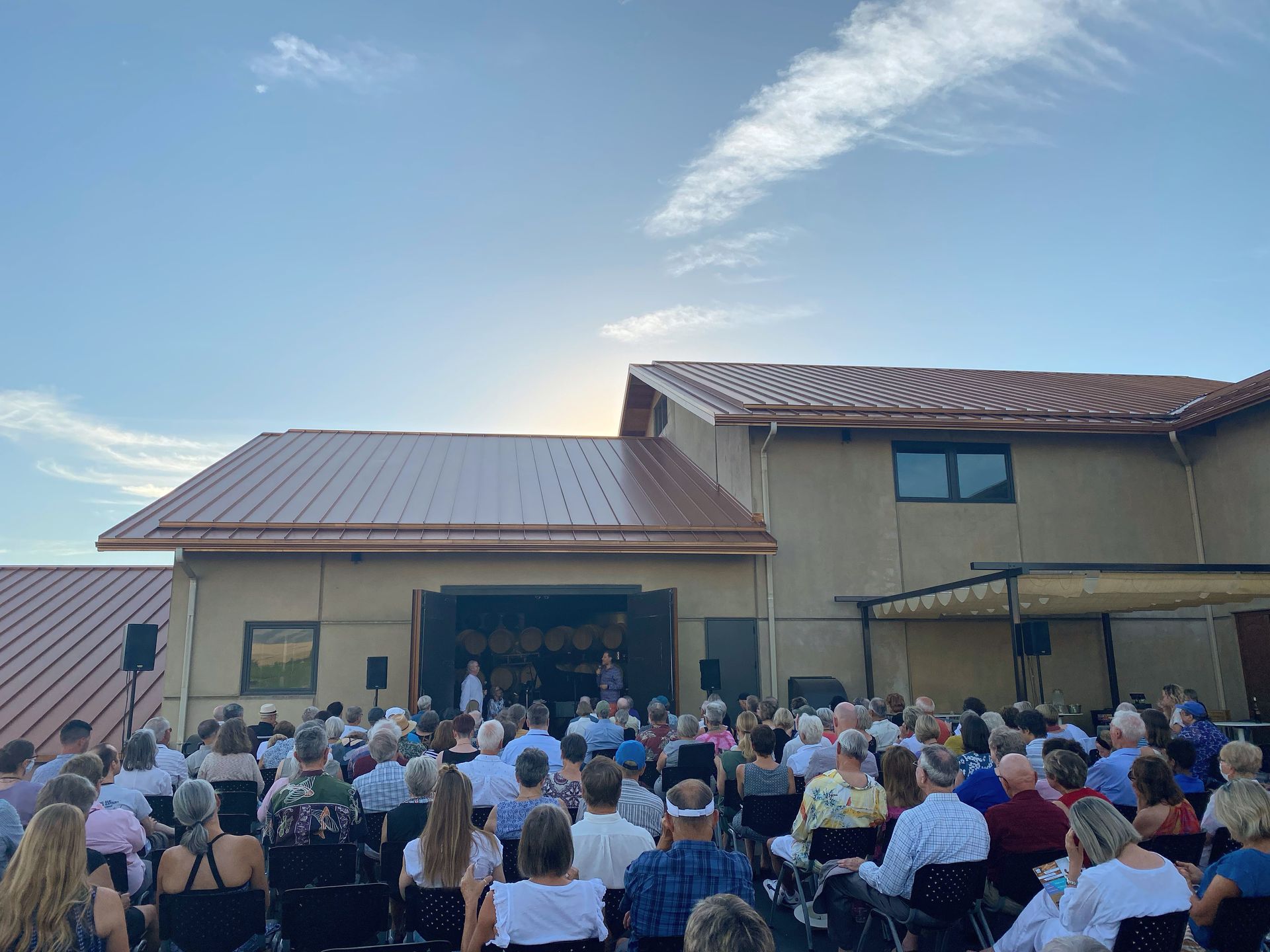
Pepper Bridge will be hosting two performances for the Walla Walla Chamber Music Festival. The goal of the Festival is to deepen the understanding and appreciation of classical chamber music while forging connections between musicians, audiences, venues and the greater community.
Wine and light bites available for purchase.
June 11 | Portrait of an Artist: Tracy Doyle, Flute
6pm - 7pm
Doors open at 5pm
WWCMF welcomes back flutist Tracy Doyle for her third WWCMF appearance. It’s high time we got to know her better. She is both Professor of Flute and Director of the School of Music at the University of Puget Sound in Tacoma, WA. If you are doing the math as you go, you have just figured out that Tracy is therefore your author’s boss. It should make for an interesting conversation!
Tracy is an artist of tremendous curiosity and range. Her program summons the immortal strains of Pan (the OG flutist), winds through the Indian Subcontinent, finds time for a quintessentially American meditation on Summer, pauses in the British Isles and eventually finds its way (back) to the flutiest place on earth, France. There is music by Claude Debussy, Reena Esmail, Ian Clarke, William Grant Still, Georges Hüe and Jacques Ibert. And by the way, is it flutist or flautist? You can expect both clarity on the subject and a phenomenal concert.
Artists: Winston Choi, piano; Timothy Christie, Viola; Tracy Doyle, flute; MingHuan Xu, violin
Wine and light bites available for purchase.
June 12 |
Tasting Music: Bartók Piano Quintet in C
6pm - 7pm
Doors open at 5pm
Béla Bartók (1881–1945)
Béla Bartók is a composer of contrasts. He is also the composer of Contrasts, a work for piano, clarinet and violin heard at such Festivals as this one waaaay back in 2009. (It is known that here at WWCMF we don’t like to repeat pieces all that frequently, so rich and varied is our repertoire. Maybe after 17 or 18 years it’s high time to revisit the piece!) Immediate digression aside, contrast defines Bartòk’s legacy. He was a collector and curator of ancient folk music passed down by generations through oral tradition and simultaneously an innovator who personified the spirit of experimentation associated with the 20th century avant-garde. A prodigy, Bartók gave his first public performance at the age of 11 and fittingly included his very first composition, a solo piano work titled “The Course of the Danube.”
The ‘course of the Danube’ serves as quite the metaphor for the early Piano Quintet in C. Composed in Germany in 1903 – 1904, premiered in Vienna, Austria and redolent of melodies and rhythms from Slovakia, Hungary and Romania, the Piano Quintet winds its way through Europe like the Danube itself in an ever-shifting swirl of Johannes Brahms, Richard Strauss and something new, hints of folk modernism and a premonition of the Night Music style that would haunt Bartók’s mature compositions like Music for Strings, Percussion and Celeste, Concerto for Orchestra and Third Piano Concerto, masterpieces all. Join us as we go to the source: C major, no sharps or flats, the white keys on the piano. At least, it ends that way. Along the way we’ll explore all the black keys, too, and even tune our string instruments down a half-step midstream to get that authentic Hungarian folk sound. In addition to great music, Hungary is also known for its variety of peppers and distinctive wines. Thus, we will feel right at home at Pepper Bridge Winery, a WWCMF favorite these many years.
Piano Quintet in C, Sz. 23 (1904)
I. Andante
II. Vivace (Scherzando)
III. Adagio –
IV. Poco a poco più vivace
Artists: Winston Choi, piano; Timothy Christie, viola; Norbert Lewandowski; cello; Philip Payton, violin; MingHuan Xu, violin
Wine and light bites available for purchase.
